
Last updated November 15, 2026
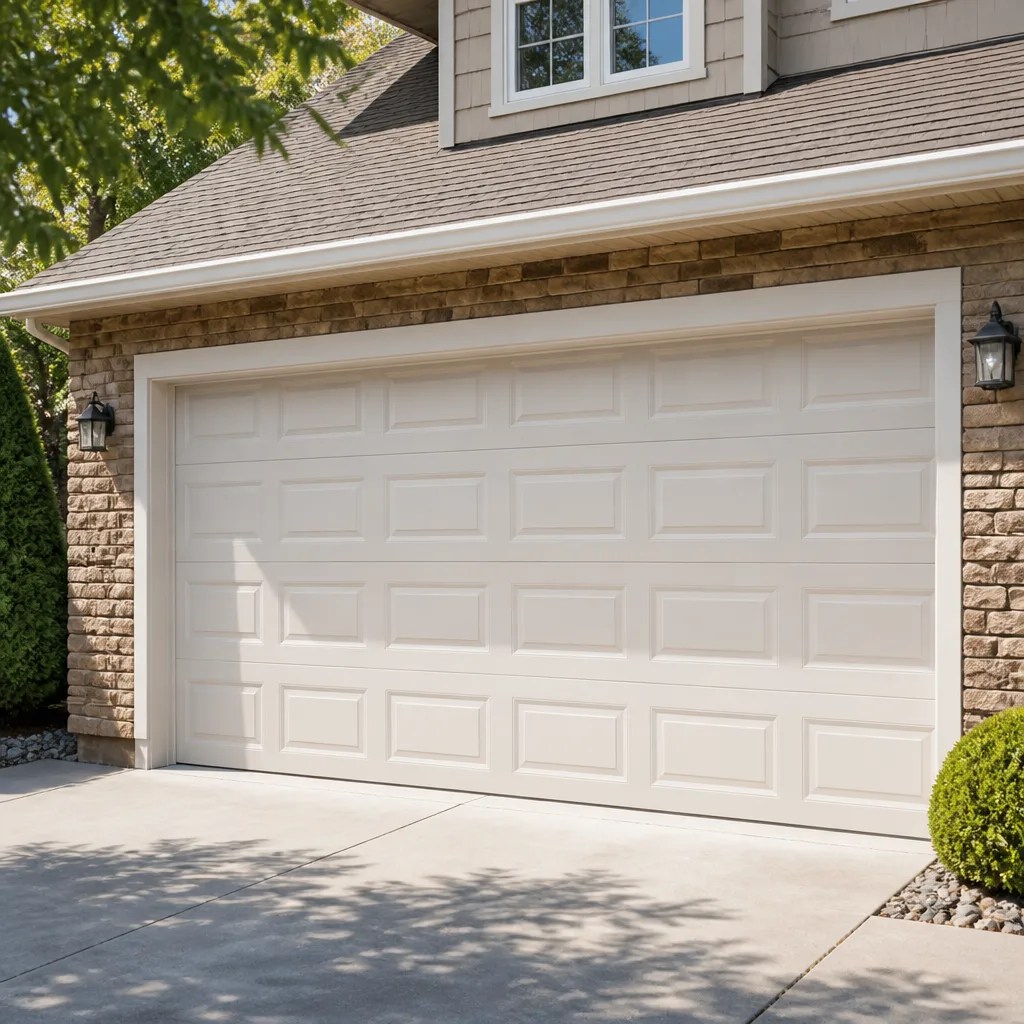 Raised-panel steel
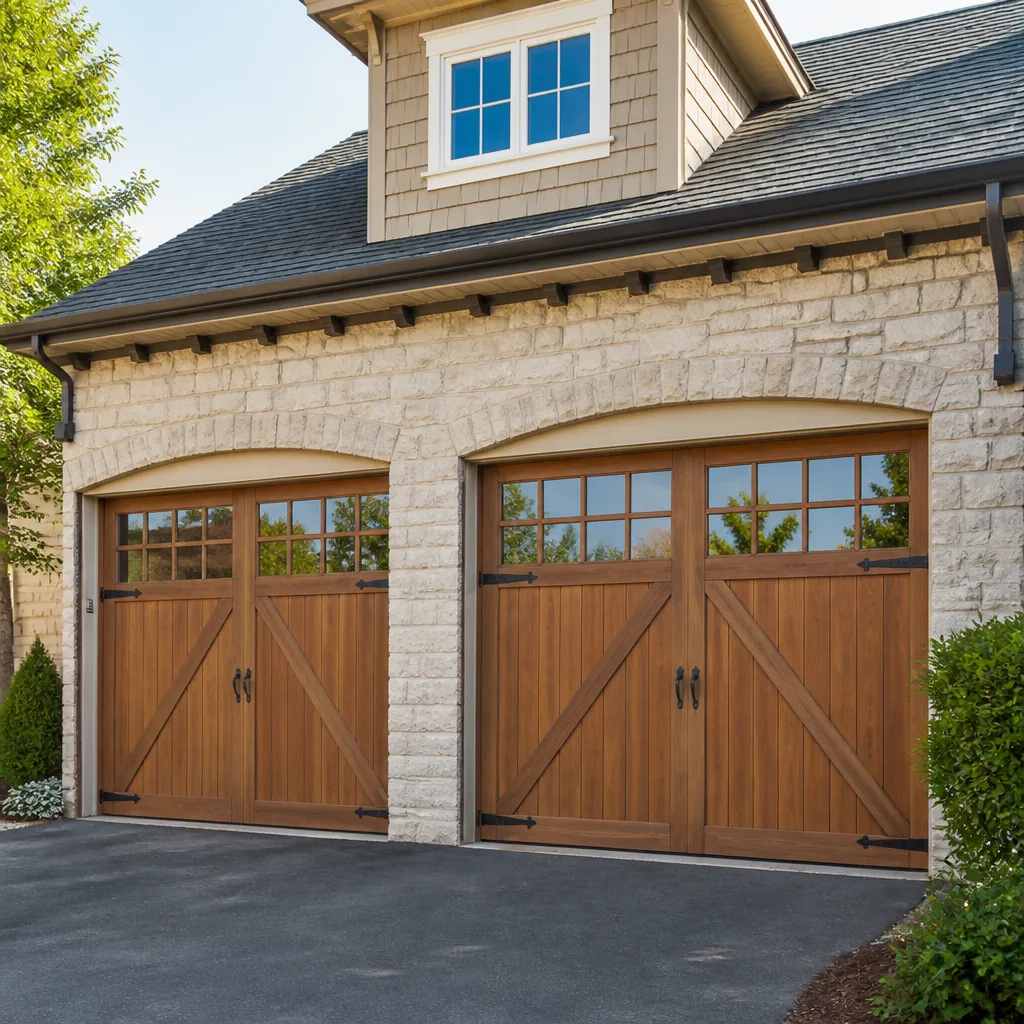 Carriage house
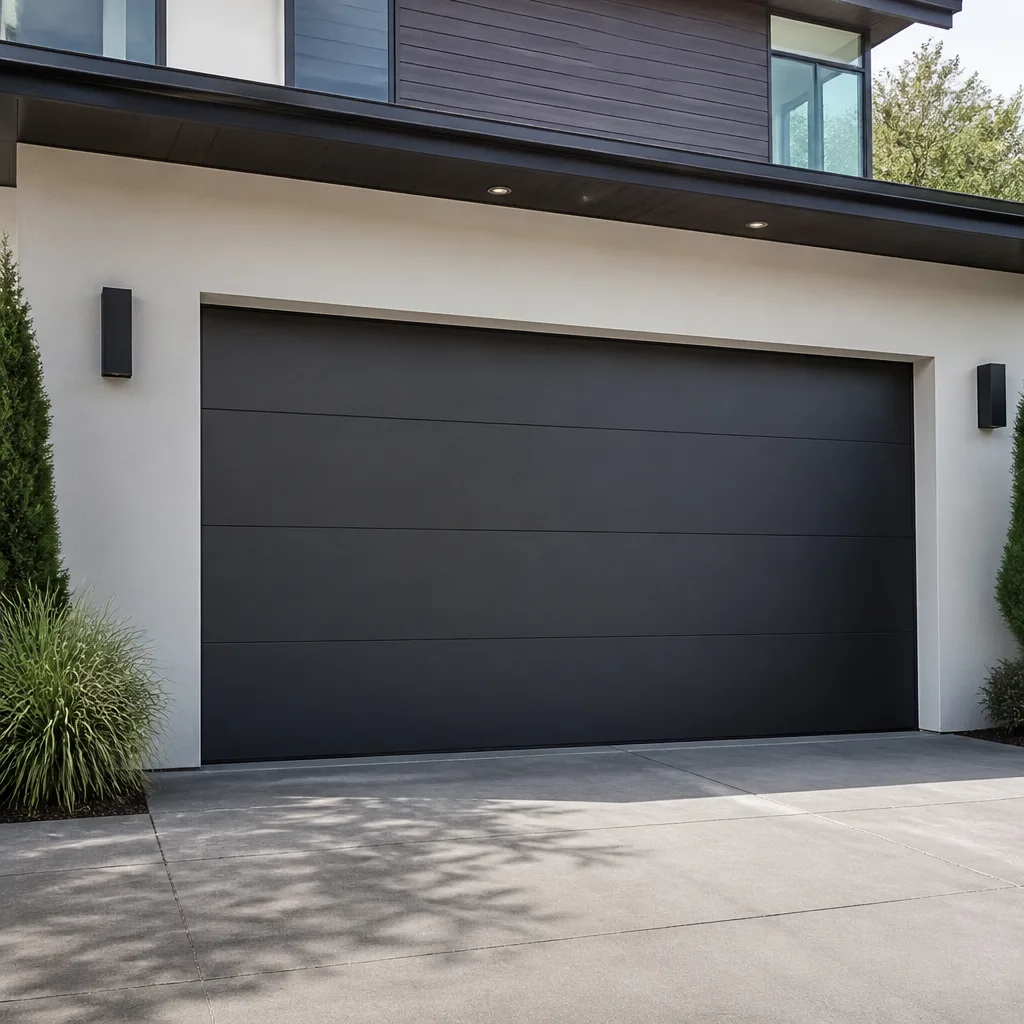 Modern flush
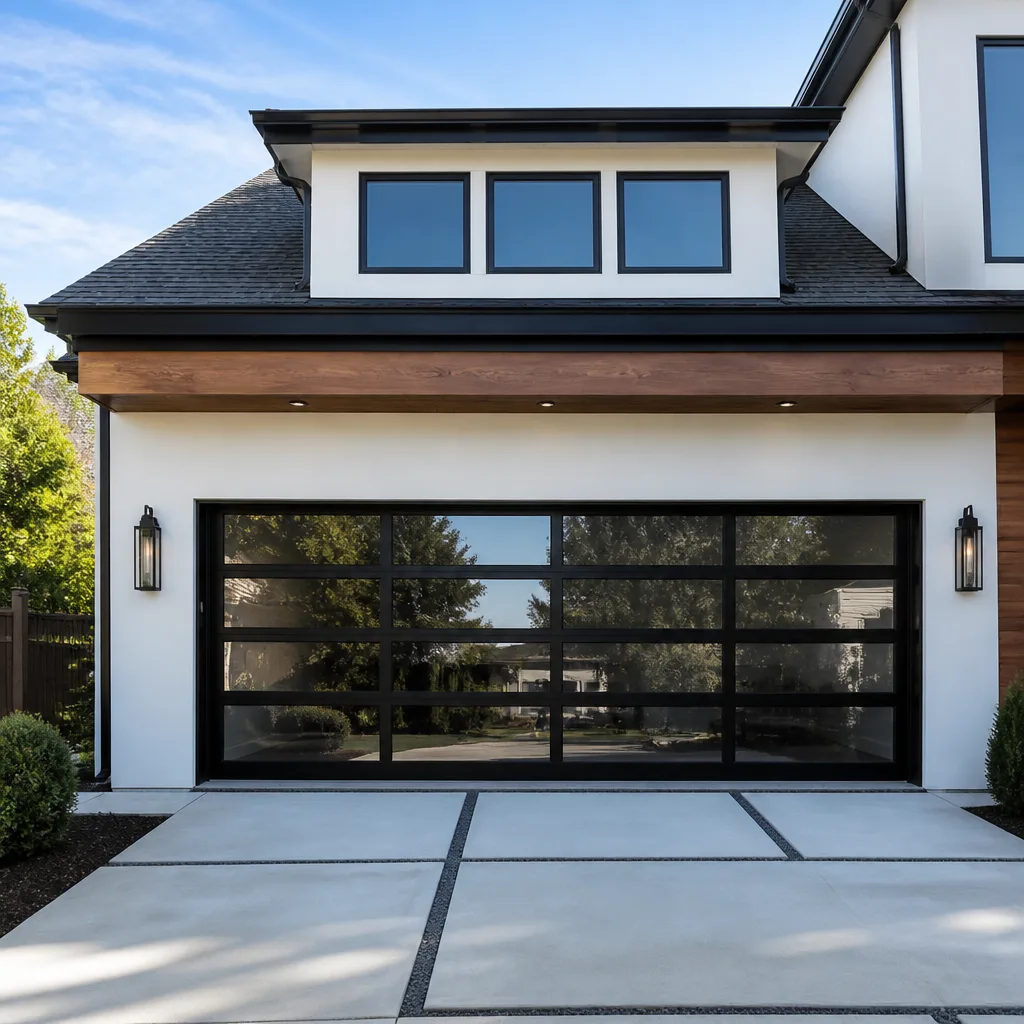 Full-view glass
 LiftMaster openers
 Chamberlain openers
Full 25-point door and opener safety check with every visit - springs, cables, rollers, tracks, and your LiftMaster or Chamberlain opener included
You get a price before we start. It does not change when the pro arrives.
Get your free estimateThe Complete Guide to Garage Doors in Brockton
Brockton has one of the highest percentages of pre-1980 homes in Plymouth County, and a lot of those garages went up before anyone standardized how big a garage door opening should be. That’s the first surprise most homeowners hit: the “standard” replacement door quoted on a big-box website often isn’t standard for their house at all. A rough opening measured in an older Brockton garage can come in narrower, shorter, or slightly out of square compared to what a modern door assumes. This guide walks through what that means for sizing, materials, insulated doors and openers in our winters, how to match a door to colonial and triple-decker architecture, and where repair makes more sense than replacement. Read it before you sign anything.
Quick Answer
In Brockton, the right garage door decision starts with measuring the actual rough opening, not trusting a “standard” size, because pre-1980 housing stock often runs non-standard. Insulated steel or insulated composite doors handle the freeze-thaw cycle best, and heavier insulated panels usually want a 1¼-horsepower belt-drive opener rather than a lighter-duty unit. Repair is the sensible call for springs, cables, rollers and opener faults; full replacement is worth it when panels are bent, rusted through, or the opening itself needs correction. Every price should be written down and agreed before work starts.
Styles & brands we work with
- Raised-panel steel
- Carriage house
- Modern flush
- Full-view glass
- LiftMaster openers
- Chamberlain openers
Table of Contents
- Why Brockton’s Older Homes Break the “Standard Size” Rule
- Which Door Materials Hold Up to Brockton’s Freeze-Thaw Cycle
- Opener Horsepower for Heavier Insulated Doors in Cold-Climate Garages
- Matching a New Door to Colonial and Triple-Decker Architecture
- Brockton-Area Permits: Replacing vs. Repairing
- What Garage Door Work Typically Costs in Brockton
- Repair or Replace? How to Decide
- A Simple Maintenance Routine for Brockton Homeowners
Why Brockton’s Older Homes Break the “Standard Size” Rule
Most national garage door content assumes a single-car opening of about 8 or 9 feet wide and 7 feet tall, or a double at 16 by 7. In a city where a large share of homes predate 1980, those numbers are a starting point, not a guarantee. Garages built decades ago were often framed to whatever the builder had on hand, so openings can measure a few inches off in either direction. Height is the more common culprit: many older Brockton garages sit a little lower than today’s 7-foot default.
That matters for three reasons.
- Headroom: A door needs clearance above the opening for the tracks and the torsion spring assembly. A short garage can force a low-headroom setup instead of a standard one.
- Backroom: The door has to travel back into the garage along horizontal tracks. A shallow garage may need a different track configuration or a high-lift setup.
- Square and plumb: Older framing settles. A door installed into a racked opening will bind, wear its rollers, and put strain on the opener.
The practical rule: nobody should quote a replacement door from a model number alone. A proper measure of the actual rough opening, plus the headroom and backroom, comes first. If a company quotes you a door over the phone without measuring, that’s not a quote, it’s a guess. When we take on garage door repair and replacement work, the measure happens before anything is ordered, and the written price follows the measure.
One more local note: correcting a non-standard opening is a carpentry job, not a door job, and it should be scoped and priced separately. Ask for that in writing too, so a surprise frame adjustment doesn’t appear as an unlisted line on the final bill.
Which Door Materials Hold Up to Brockton’s Freeze-Thaw Cycle
Brockton winters swing above and below freezing repeatedly, and that cycle is harder on garage doors than a long, steady cold. Water works into seams, freezes, expands, and works them loose again. The materials that survive this best share one trait: they don’t absorb moisture and they don’t rely on paint to stay intact.
- Insulated steel: The default for most Brockton homes. It holds up to freeze-thaw, resists denting reasonably well, and the insulation layer keeps the garage from swinging wildly in temperature. Buy a door with a factory finish rather than bare steel that needs painting.
- Composite and fiberglass: Won’t rust, won’t warp, and handle damp better than wood. Good for homeowners who want a wood look without the upkeep. The trade-off is cost.
- Aluminum: Light and rust-resistant, but dents easily. In a garage where kids’ bikes and lawn equipment live, it can look worn fast.
- Wood: Beautiful on a colonial, and the highest-maintenance option here. Wood needs refinishing on a schedule, and freeze-thaw punishes any spot where the finish fails.
Steel doors represent a large share of what’s already installed across Brockton, which is one reason we keep our parts knowledge current on the panel and hardware systems used by Clopay and Amarr – the brands many of these doors carry. If your existing door is steel and the panels are sound, repair usually beats replacement.
What about road salt tracked in on the car and thrown up by the tires? Any steel component near the floor – bottom brackets, rollers, hinges – benefits from a rinse now and then during the winter months. That’s a five-minute habit, not a maintenance plan.
Opener Horsepower for Heavier Insulated Doors in Cold-Climate Garages
A heavier door needs a stronger opener, and cold weather makes everything stiffer. An insulated double door can weigh considerably more than the uninsulated door it replaced, and lubricant thickens when the garage drops below freezing. Undersized openers on heavy doors are a common cause of the “it opens a foot and stops” complaint.
Here’s the general sizing logic we work from:
- Light single doors, uninsulated: A ½-horsepower unit is usually adequate.
- Insulated single doors: Move up to ¾ horsepower.
- Insulated double doors, or any door with glass: 1¼ horsepower belt drive is the sensible standard. Belt drive runs quieter, which matters if the garage sits under a bedroom.
- Heavy custom or oversized doors: Match the opener to the door’s actual weight and the manufacturer’s spec, not to a rule of thumb.
The drive type matters as much as the number. Chain drives are durable and louder. Belt drives are quiet and cope well with the temperature swings. Screw drives sit in between. For a cold-climate garage, belt drive on a 1¼-horsepower unit is the combination we see work most reliably on insulated doors.
When an opener misbehaves in January, the door itself is often fine. garage door opener repair is a distinct job from door repair, and it’s worth having someone who troubleshoots the drive system specifically rather than a generalist who fixes the door and shrugs at the motor. We service LiftMaster, Chamberlain, Genie and the other major lines, so we’re not learning your unit on your driveway.
Matching a New Door to Colonial and Triple-Decker Architecture
Brockton’s housing mix gives you two dominant looks to work with. Colonials and capes want a door that reads as part of the facade: paneled, symmetrical, and in a color that matches the trim. Triple-deckers, with their stacked porches, want something simpler and more uniform – a flat or lightly paneled door in a single color, so the building’s rows of windows stay the visual focus.
Getting this right is mostly about restraint.
- Colonial and cape: Raised-panel steel in white, cream, or a muted gray. Carriage-house style works if the house already has some period detail; skip it on a plain facade.
- Triple-decker: Flush or short-panel doors, one color, consistently repeated across units. Ornate styling on a triple-decker tends to look busy against the porches.
- Ranch: A low, wide look – horizontal panels, no decorative hardware, a color that blends with the siding.
- Windows: A row of windows in the top panel suits colonials. On a triple-decker, keep it minimal or skip them entirely.
Match the color to the trim, not the siding. On older Brockton homes the trim is what your eye reads from the street, and a door that matches it looks intentional rather than added. If you’re unsure, look at what your neighbors on the same block have done. Streets built in the same era tend to share a look for a reason.
Full installation is a scheduled job, not a same-day one. Laurel Garage Door Repair handles it from measure to final adjustment, and we’ll walk you through rough opening, finish and hardware before you commit to anything.
Brockton-Area Permits: Replacing vs. Repairing
Whether you need a permit depends on what’s being done, and the honest answer is that rules vary by jurisdiction and change. Most cities treat a like-for-like door replacement differently from structural work, and repairing springs, cables, rollers or an opener typically falls outside permitting altogether. What matters is that you ask before work starts rather than after.
- Ask the city’s building department. A quick call to Brockton’s building department will tell you whether your specific job needs a permit. Do this before you schedule.
- Describe the job accurately. “Replacing a door in the same opening” is not the same as “enlarging the opening” or “reframing the header.” Different descriptions, different answers.
- Get it in writing. If a permit is required, the written quote should say who’s pulling it and what it costs.
- Repairs usually skip the process. New springs, cables, rollers, hinges or an opener swap don’t change the structure of the house, so they’re typically permit-free.
For a straight door replacement on a standard opening in Brockton, many homeowners find they don’t need a permit, but you shouldn’t take our word for it or anyone else’s. Confirm it with the city. If your job turns out to require one, that’s the point to build the timeline and cost into the written estimate, not after the door has arrived.
What Garage Door Work Typically Costs in Brockton
Prices vary with door size, material, opener model, and whether the opening needs correction. The ranges below are typical estimates for a Brockton-area job, not quotes. Every job gets its price set by a written estimate, and that written estimate is the number you pay.
- Spring replacement, one spring: roughly $180 – $340. Matched pairs are usually replaced together, so a pair runs about twice that.
- Cable replacement: roughly $150 – $300.
- Roller, hinge or track adjustment: roughly $100 – $250.
- Opener replacement: roughly $350 – $700, depending on horsepower and drive type.
- Insulated single door, installed: roughly $1,200 – $2,500.
- Insulated double door, installed: roughly $2,000 – $4,000.
Two things shift a job to the high end of a range: a non-standard opening that needs framing adjustment, and a heavy door that forces a bigger opener than the homeowner expected. Both come up more in Brockton’s older homes than they would in newer construction.
A word on the spring prices here and everywhere else you’ll read them: many sources quote one number for “spring repair” and leave out that a pair costs about double. If you’re comparing bids, make sure each one says how many springs are included.
The full range of what we handle is on our Brockton service page. When you call, the price is quoted and agreed before any work starts.
Repair or Replace? How to Decide
Repair is the right answer more often than a sales pitch will suggest. Garage doors are made of discrete parts, and most failures are one part, not the whole system. Replace when the structure has gone, not when a component fails.
Repair is usually the call for:
- A broken or noisy spring, a snapped cable, or a door that runs rough on its tracks.
- An opener that opens a foot and stops, reverses, or won’t respond to the remote.
- A single bent panel on an otherwise sound door.
Replacement is usually the call for:
- Panels that are bent beyond repair, rusted through, or delaminating.
- A rough opening that’s out of square badly enough to keep wearing out the door.
- A door that’s technically intact but so poorly insulated the garage stays freezing all winter.
If you’re on the fence, get the repair priced first. A repair that costs a fraction of a replacement, on a door with years left in it, is usually the better buy. We’ll tell you which side of the line your door is on before recommending anything.
A Simple Maintenance Routine for Brockton Homeowners
Most of what goes wrong with a garage door in Brockton starts small. A few minutes now and then saves a repair call later, and none of it involves touching the springs, which is the one part of a garage door that should never be a DIY project.
- Once a month: Run the door up and down and listen. Squeaks, grinding and uneven travel all point at something specific.
- Twice a year: Clean and lubricate the rollers, hinges and track channels with a garage-door lubricant – not grease, and not WD-40, which attracts dirt.
- Before winter: Wipe down the bottom brackets and hinges to clear any salt or grit, and check the weather seal along the bottom for cracks.
- After any storm: Look at the panels for dents or separation. Hail is uncommon here, but wind-driven debris isn’t.
Two things to check by eye, never by hand: springs and cables. If a spring looks rusty or the door feels heavy to lift manually, that’s a professional call, not a Saturday project.
Common Mistakes to Avoid
- Ordering a door from a model number without measuring. In a city full of pre-1980 homes, this is how a replacement arrives and doesn’t fit. Get the rough opening, headroom and backroom measured first.
- Replacing one spring of a pair. The second spring has the same wear as the first. Replacing one leaves you with a mismatched pair and a repeat visit soon after.
- Sizing the opener to the old door. When you upgrade from an uninsulated door to an insulated one, the opener needs to go up with it. A ½-horsepower unit on a heavy insulated double will struggle all winter.
- Buying the cheapest door on price alone. A thin, uninsulated door in a cold-climate garage means a freezing garage all winter and a heavier load on the opener.
- Matching the door to the siding instead of the trim. On older Brockton homes the trim is what your eye reads from the street. A door that matches it looks deliberate.
- Skipping the permit question. Ask the city’s building department before you schedule, not after. Rules vary and change.
- Ignoring a door that’s out of square. A door installed into a racked opening will wear out its rollers and strain the opener. Fix the frame first.
See the difference
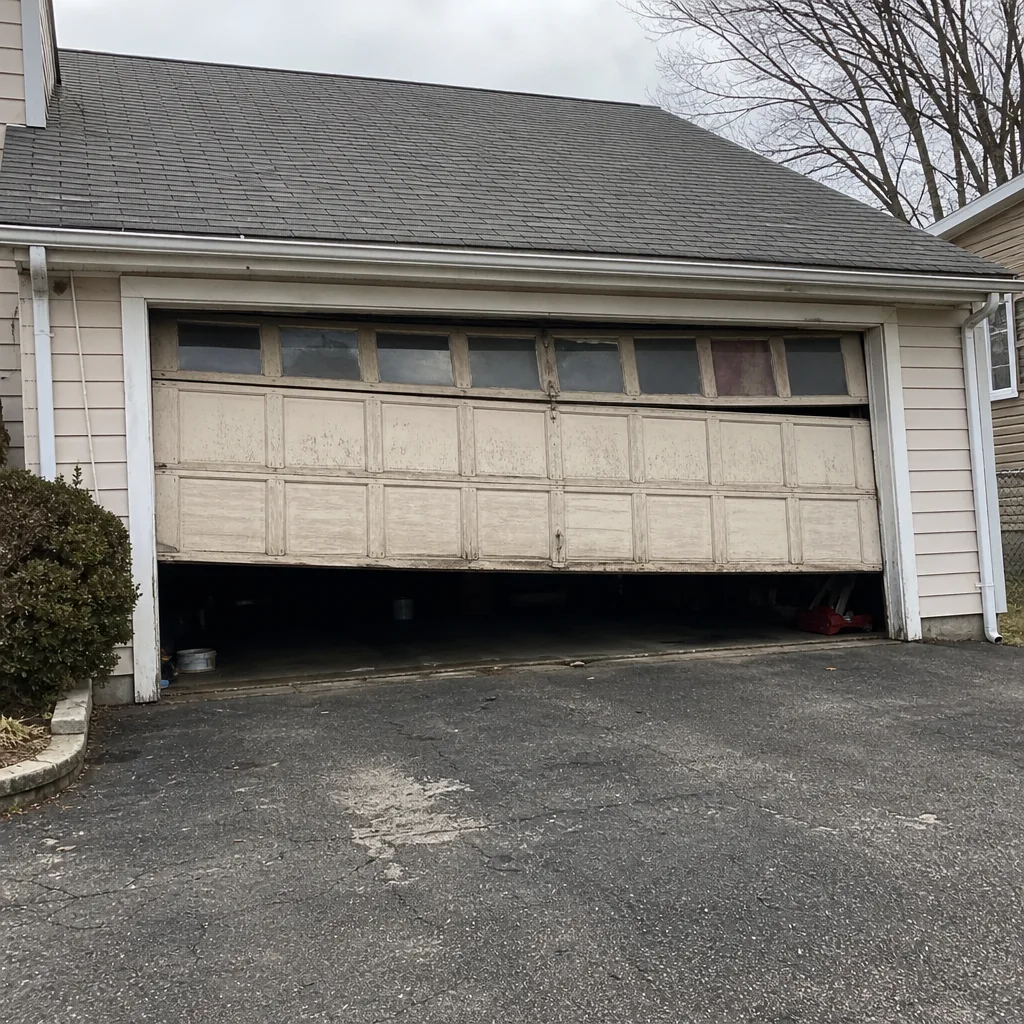 Before
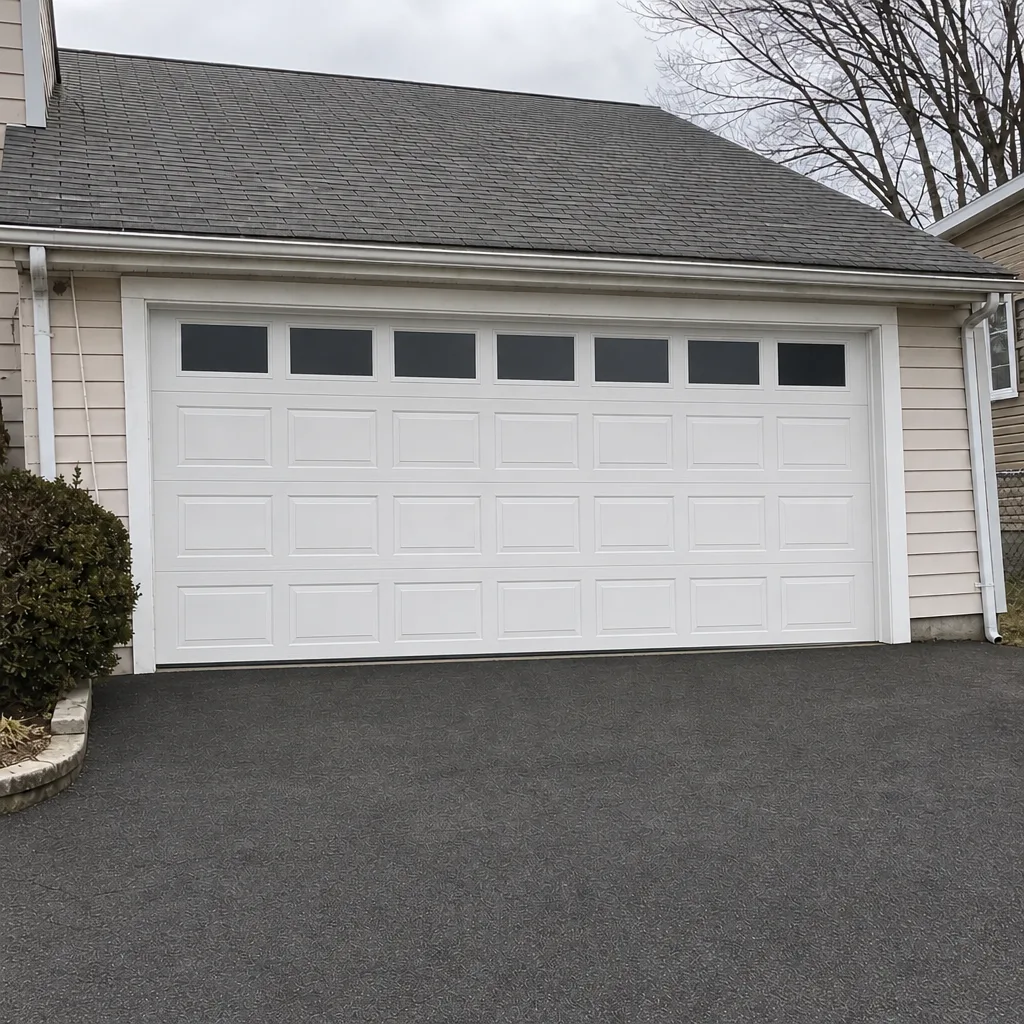 After
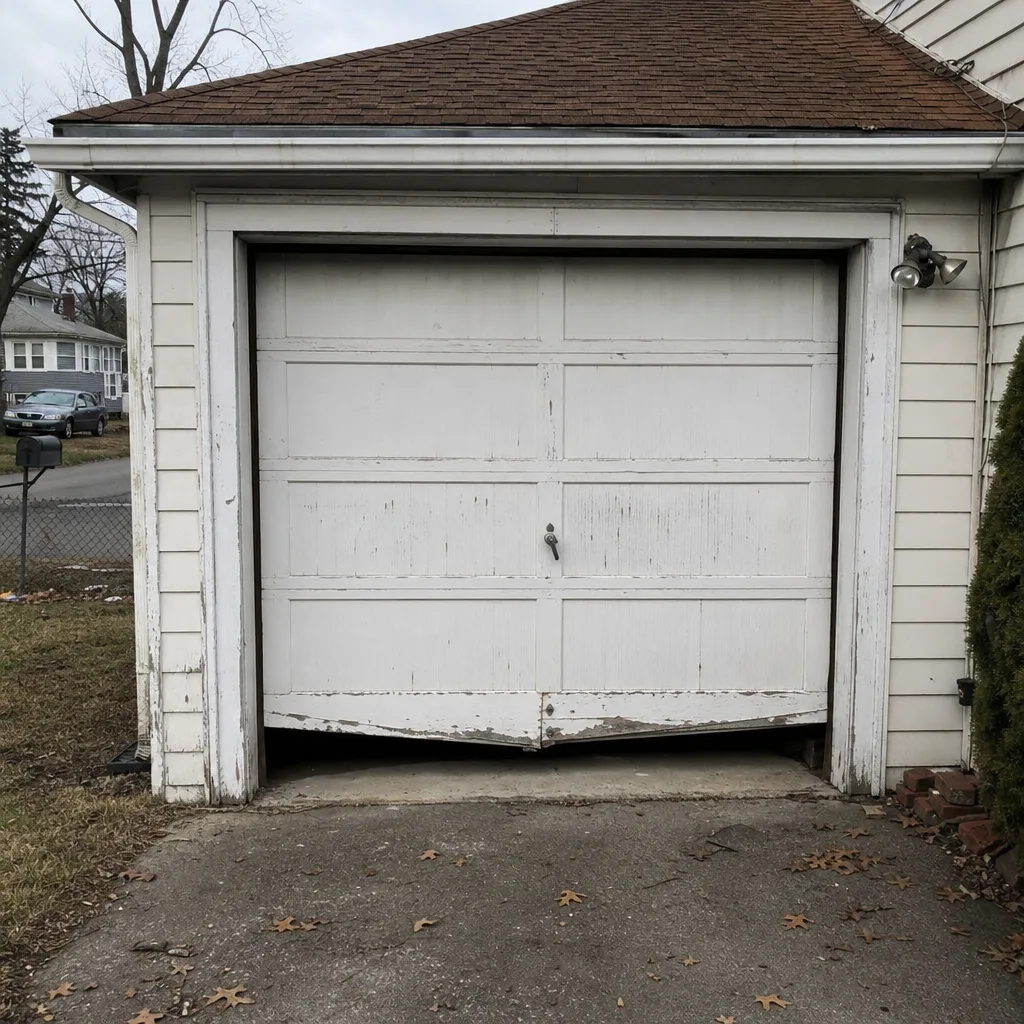 Before
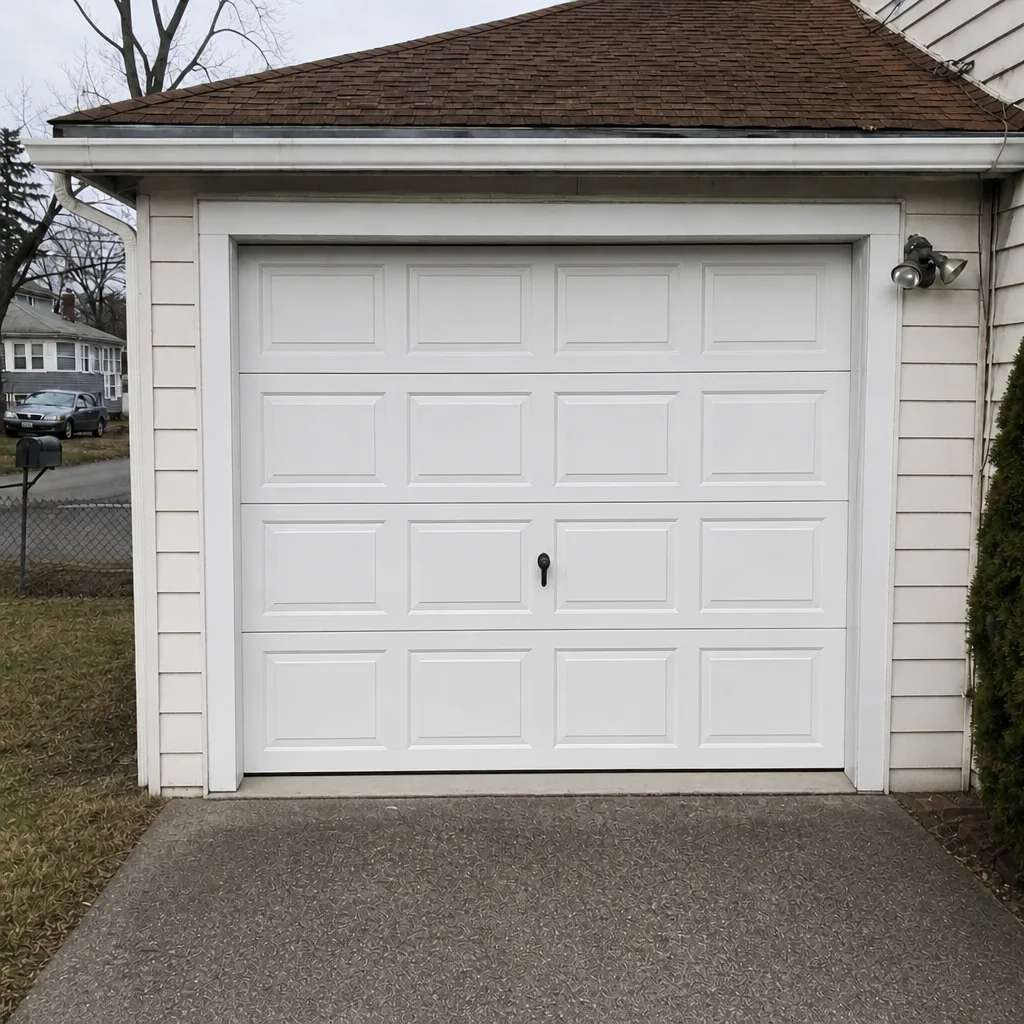 After
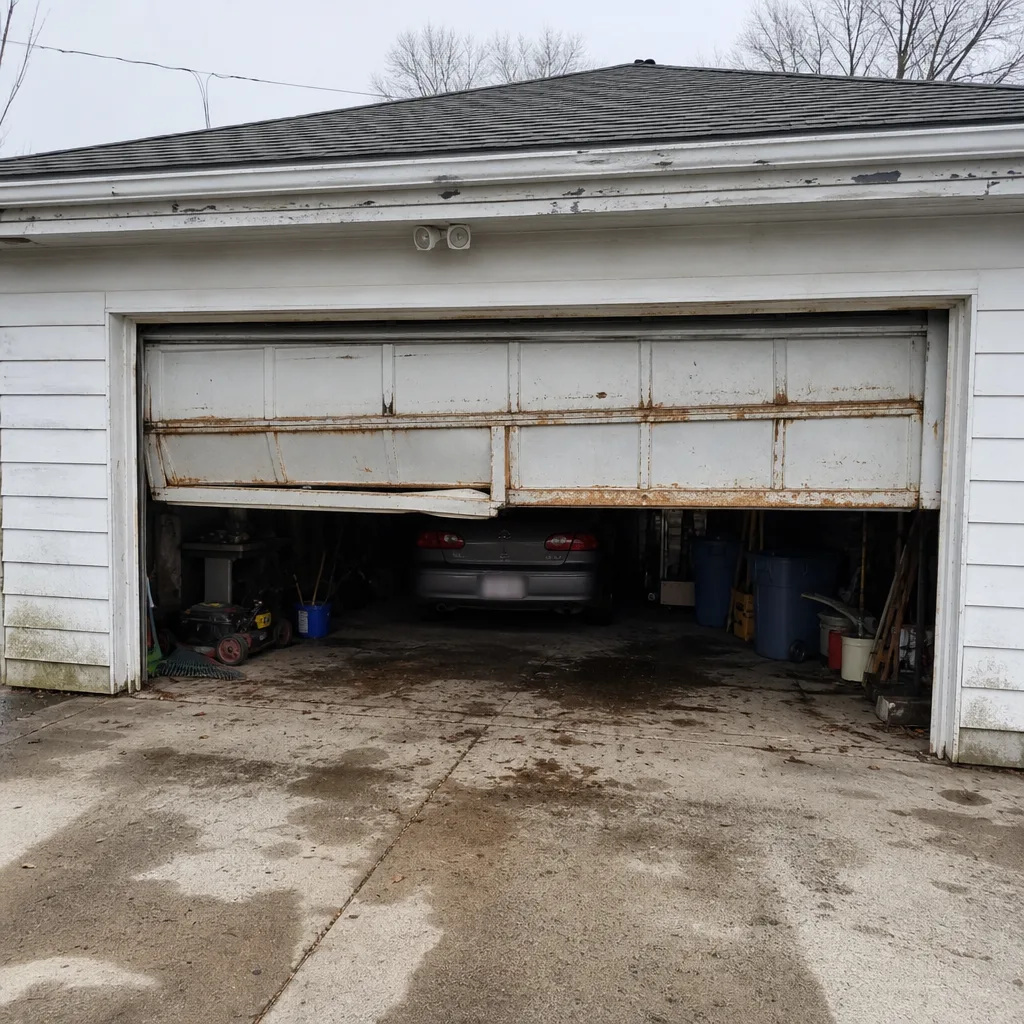 Before
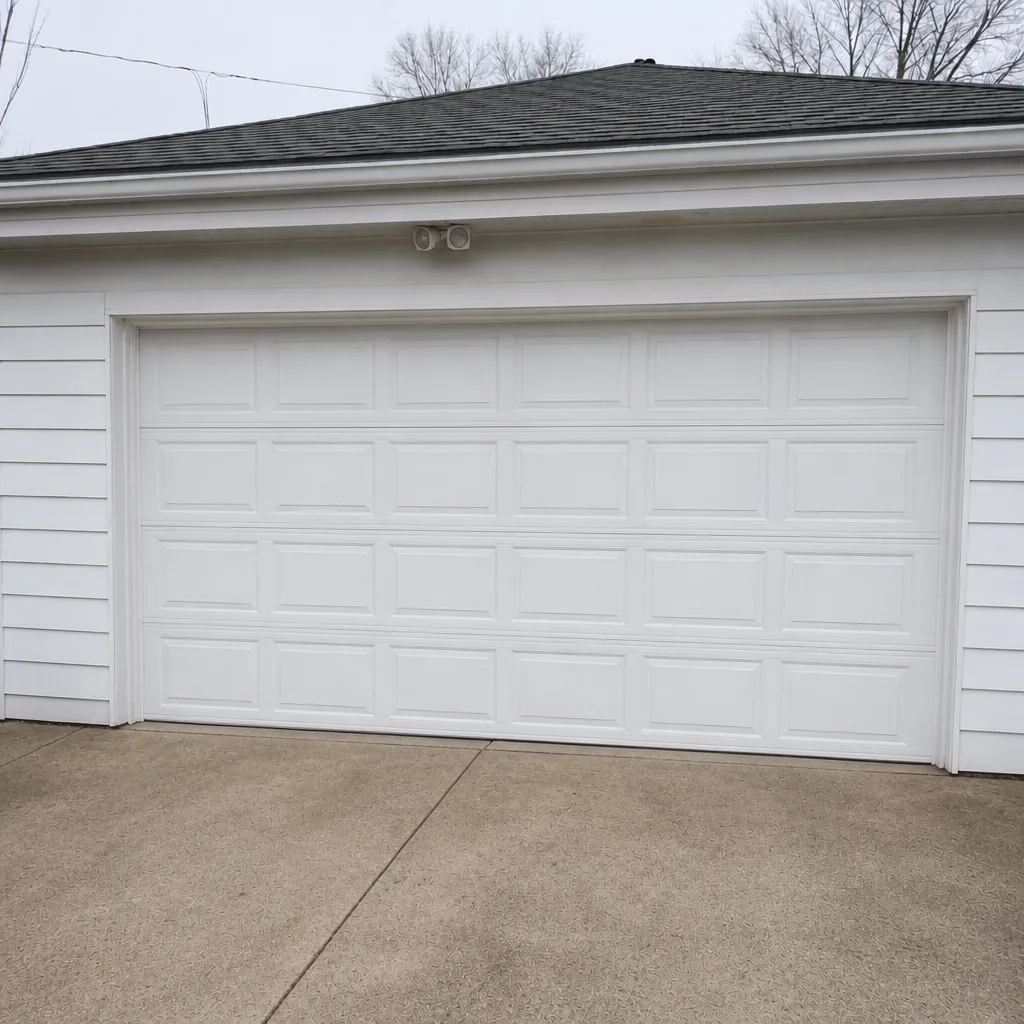 After
When to Call a Professional
Call a professional whenever the problem involves a spring, a cable, or a door that moves unevenly. Those components store or control a great deal of force, and a snapped spring or cable can cause serious injury to anyone working near it. Same goes for a door that binds, a track that’s bent, or an opener that keeps reversing on its own. On the electrical side, anything beyond a battery change in the remote or wall button is worth a trained eye rather than a go at the wiring.
For routine upkeep, adjusting a stiff track or replacing a worn weather seal is a reasonable DIY job. Past that, the call is worth making. Laurel Garage Door Repair offers free estimates in Brockton – call (844) 329-8773. We answer 24/7. Fast dispatch from 7am to 7pm, Sunday through Friday. Our technicians have up to 12 years of experience, and garage doors are the only thing we work on.
Frequently Asked Questions
Often not, for a like-for-like replacement on an existing opening, but you should confirm it with the city’s building department before scheduling. Rules vary by jurisdiction and change, and structural work like enlarging or reframing an opening is treated differently from a straight swap. Call (844) 329-8773 and we’ll walk through what your job involves.
Because a large share of Brockton homes predate 1980, and a lot of those garages were framed before modern sizing conventions settled. Openings can run a few inches narrower, shorter, or slightly out of square – and some garages are too shallow for standard horizontal tracks. The measure of the actual rough opening, headroom and backroom is what decides, not a model number. Call (844) 329-8773 for a free measure.
A 1¼-horsepower belt-drive opener is the sensible standard for an insulated double door, and ¾ horsepower is usually right for an insulated single. Belt drive runs quiet and copes well with temperature swings. Undersized openers on heavy doors are a common cause of the “opens a foot and stops” complaint. Call (844) 329-8773 for an exact recommendation.
Typically $180 – $340 for one spring. Matched pairs are usually replaced together, so a pair costs about twice that. The written estimate sets the final price, and it’s quoted and agreed before any work starts. Call (844) 329-8773 – estimates are free.
For repairs and opener faults, same-day service is often possible. We answer 24/7, and fast dispatch runs from 7am to 7pm, Sunday through Friday. A call outside those hours is booked into the next opening. Installation and replacement are scheduled around a measure and a door order. Call (844) 329-8773.
Yes, and it’s worth having it that way. A door that binds can strain the opener, and an opener that’s failing can make a healthy door look broken. Having the same specialist check both means the diagnosis covers the whole system instead of half of it. We service the door and the drive system together. Call (844) 329-8773.
The Bottom Line
Brockton’s older housing stock is the single biggest factor in getting a garage door decision right. Measure the rough opening before you buy anything, because the standard size may not exist in your garage. Choose insulated steel or composite over wood for our freeze-thaw winters. Size the opener to the door you’re actually installing, not the one you’re taking out. Match the style to the architecture – refined panels and trim color on a colonial, simple and uniform on a triple-decker. Confirm the permit question with the city. And repair before replacing unless the structure itself has gone.
Laurel Garage Door Repair works on garage doors and nothing else, across LiftMaster, Chamberlain, Genie, Clopay and the other major lines. Call (844) 329-8773 for a free estimate. We answer 24/7. Fast dispatch from 7am to 7pm, Sunday through Friday.
Written by the team at Laurel Garage Door Repair.