
Last updated November 15, 2026
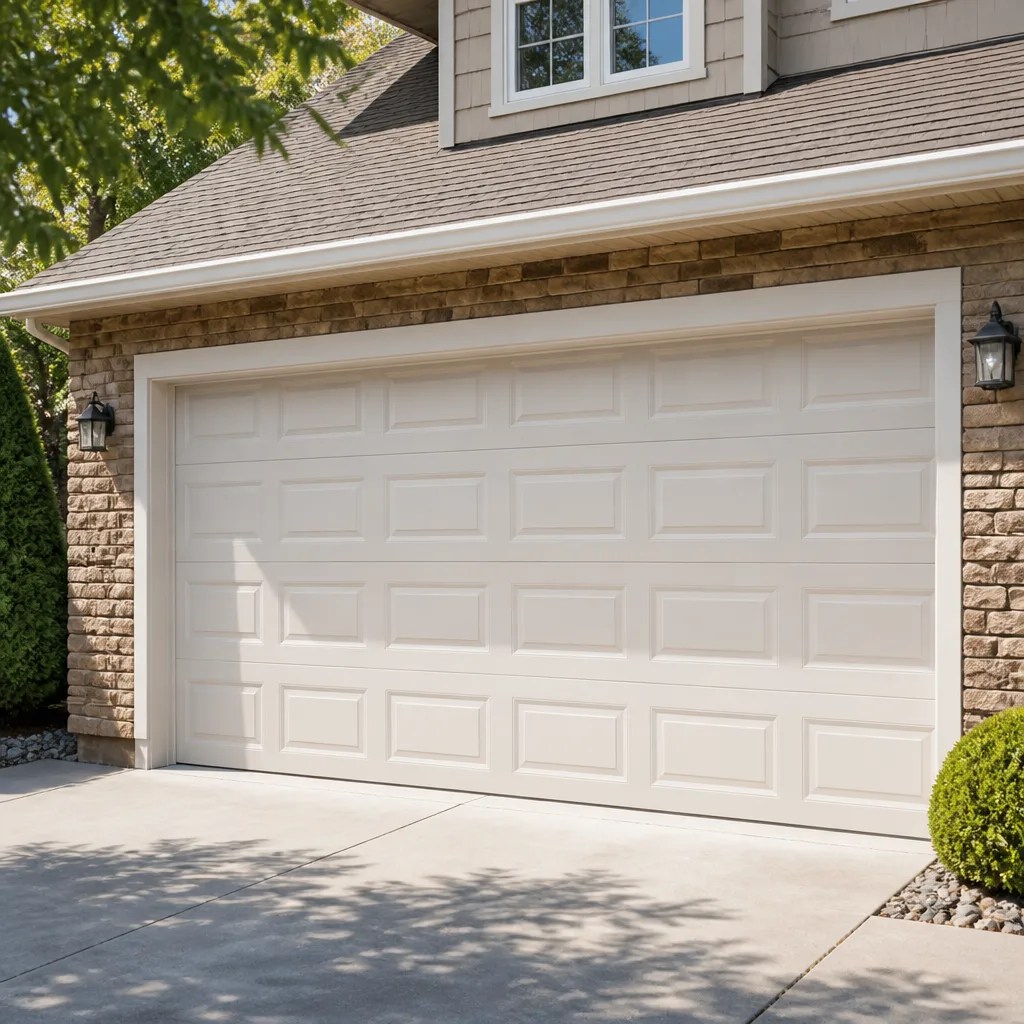 Raised-panel steel
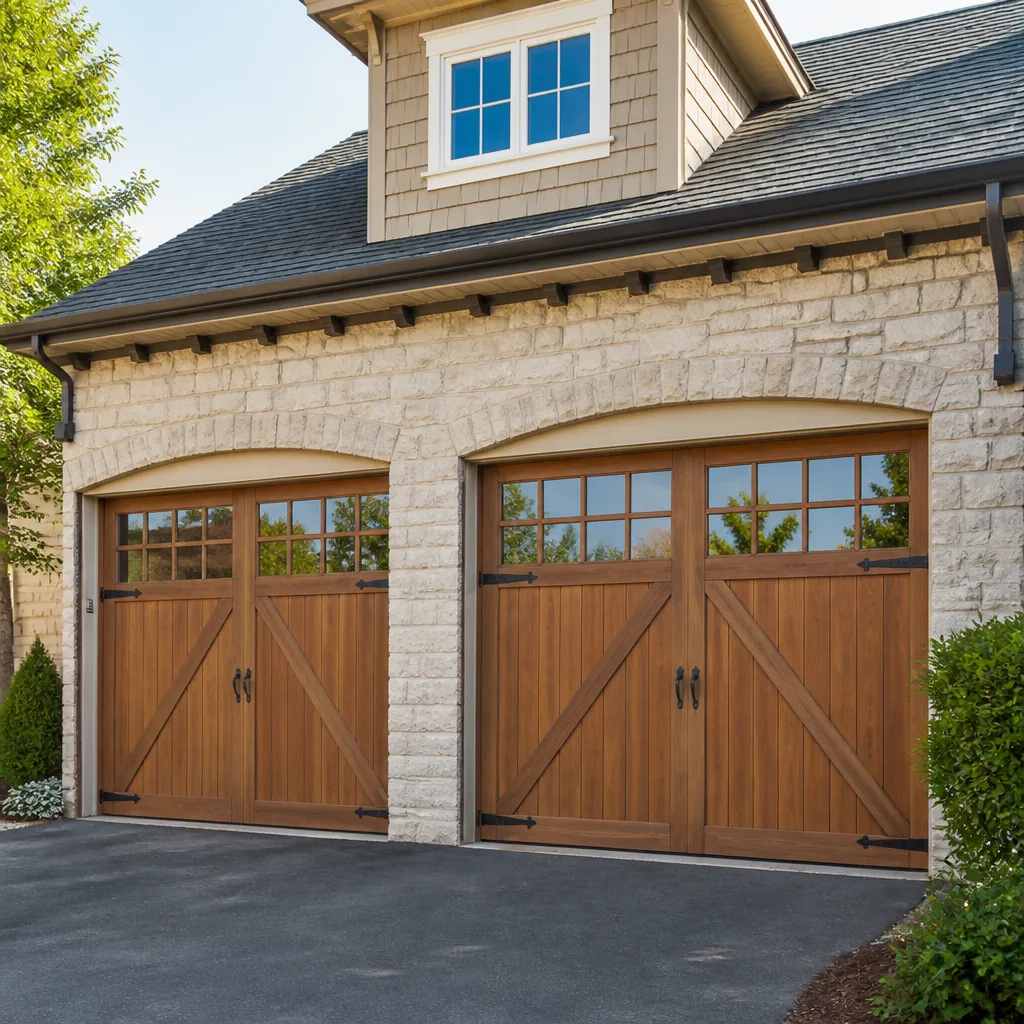 Carriage house
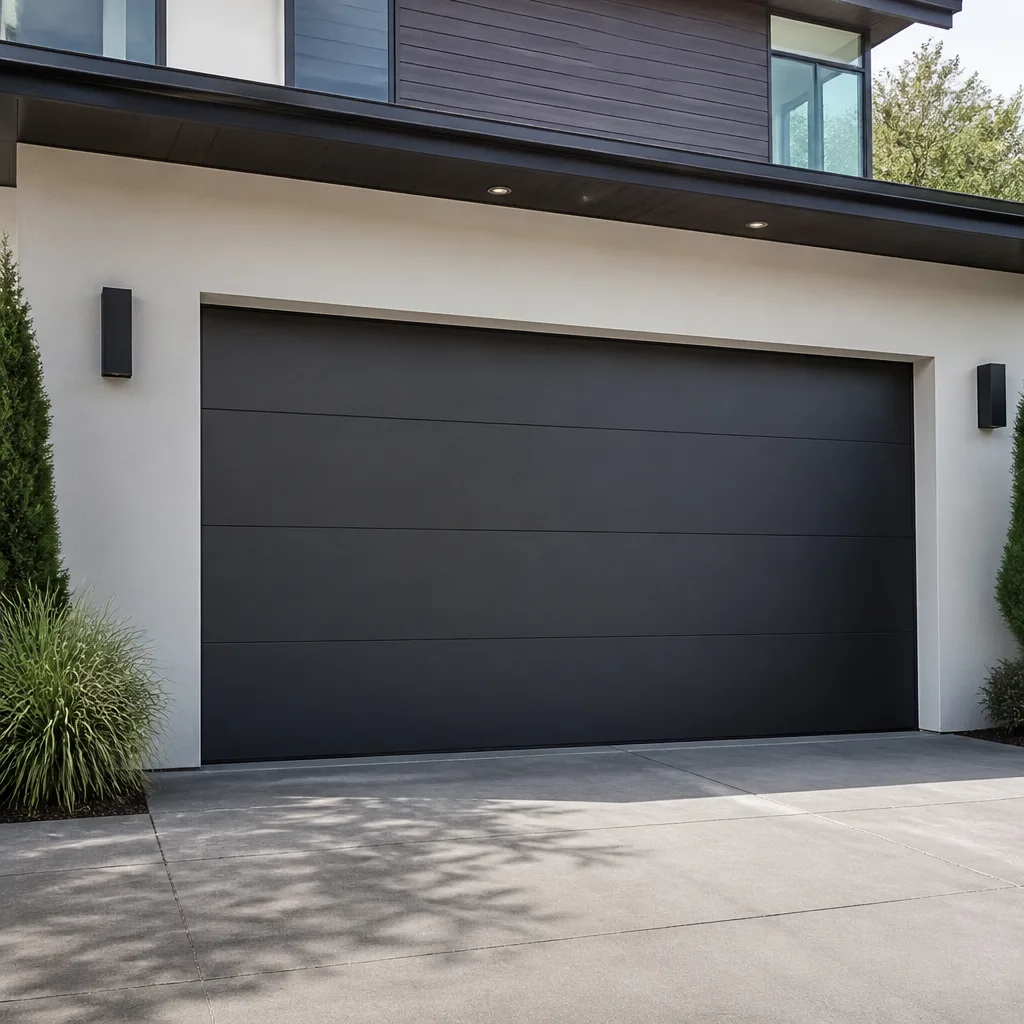 Modern flush
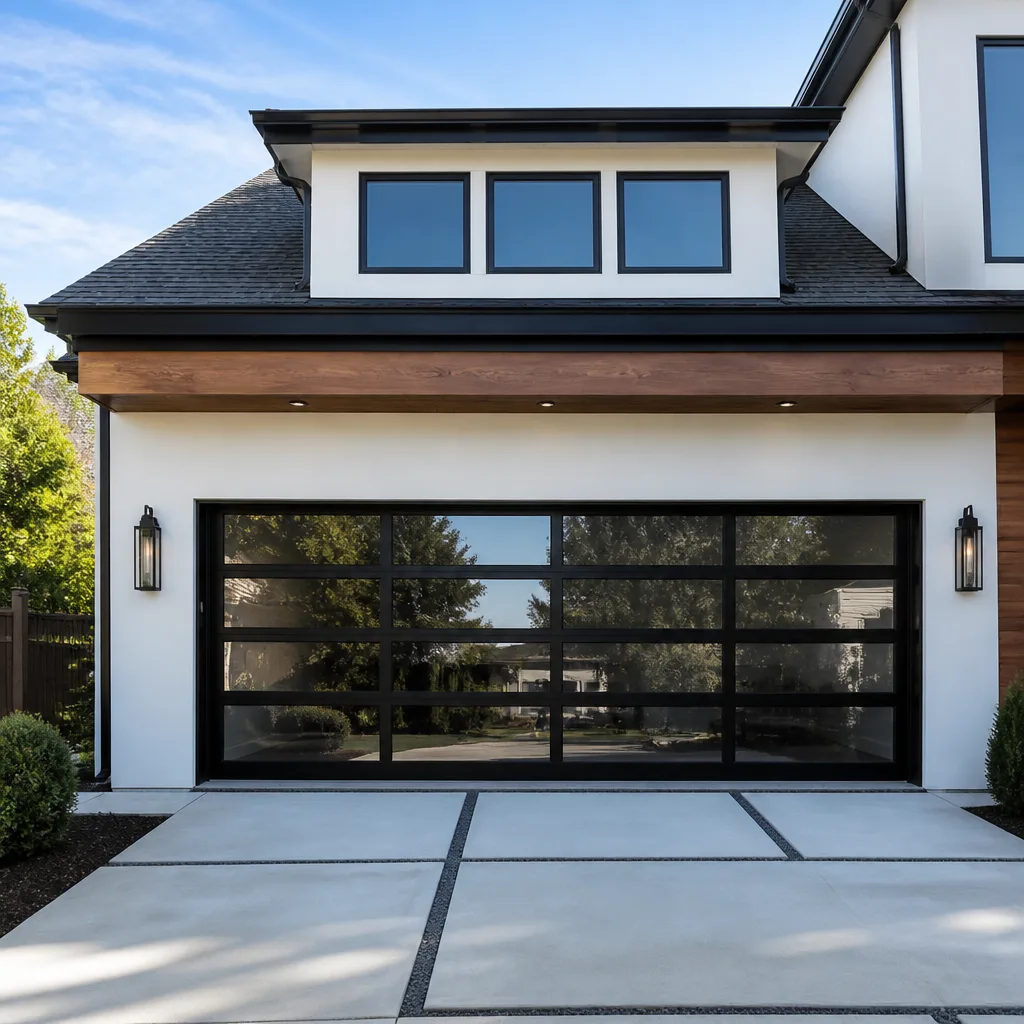 Full-view glass
 LiftMaster openers
 Chamberlain openers
Full 25-point door and opener safety check with every visit - springs, cables, rollers, tracks, and your LiftMaster or Chamberlain opener included
You get a price before we start. It does not change when the pro arrives.
Get your free estimateGarage Door Repair Troubleshooting in Brockton: Common Problems and How to Fix Them
A garage door that reverses before it closes all the way isn’t broken. It’s doing exactly what it was programmed to do. Most Brockton homeowners call us convinced the motor is dying, when the actual fault is a misaligned safety sensor, a limit setting knocked out of place, or a track twisted by a winter of freeze-thaw. The door is reporting a problem; the motor is just the messenger.
That’s the core of our troubleshooting method: read the symptom, trace it back through the system, and fix the cause instead of the noise. This guide walks you through symptom-to-cause mapping for the failures we see across Brockton, from the older housing near downtown to the newer construction off the city’s west side. You’ll learn what you can safely check yourself, what you should never touch, and the one test that tells you whether your door is balanced before it strands you.
Quick Answer
Garage door troubleshooting in Brockton starts with separating a door that won’t move at all from one that moves and fails. A door that won’t open usually points to a broken torsion spring or a snapped cable; a door that starts and reverses, jerks, or stalls points to the opener, its safety sensors, or its limit settings. Lubrication, sensor alignment, and balance testing handle a good share of the simple cases, but springs and cables are always a professional job.
Styles & brands we work with
- Raised-panel steel
- Carriage house
- Modern flush
- Full-view glass
- LiftMaster openers
- Chamberlain openers
Table of Contents
- Why Your Door’s Behavior Is a Diagnostic Chain, Not a Single Fault
- Door Won’t Open vs. Door Starts and Stops: Two Very Different Repairs
- How Brockton’s Freeze-Thaw Cycles Throw Tracks and Limits Off
- Lubrication First: The Step Most Troubleshooting Skips
- The Twice-a-Year Balance Test Every Brockton Homeowner Should Run
- Safety Sensors, Limits, and Opener Logic: Where Reversals Come From
- How to Safely Tell If a Torsion Spring Is Broken
- When to Call a Professional
Why Your Door’s Behavior Is a Diagnostic Chain, Not a Single Fault
Most people troubleshoot a garage door one complaint at a time. The door is loud, so they look for something loose. The door is slow, so they assume the motor is weak. The gap at the bottom is drafty, so they adjust the bottom seal. Each fix is isolated, and a week later the door is doing something new. That’s the trap. A garage door is a balanced system: springs store energy, cables transfer it, rollers and hinges route it along the track, and the opener simply nudges the whole thing up or down. When one link degrades, the symptom shows up somewhere else.
A door that slams shut is almost never an opener problem. It usually means a spring has lost tension, so gravity is winning on the way down. A door that grinds near the top of travel often has a hinge that’s worn or a roller that’s cocked, and the opener is working harder because the track is misaligned. Reading the symptom as a signal from one link in that chain is what separates a real fix from a temporary patch.
Here’s how we map it in Brockton. The door’s behavior tells you which link to start with:
- Won’t move, or moves only a few inches: spring, cable, or opener motor failure. The door is deadweight.
- Starts, then reverses: safety sensors, limit switch, or a track obstruction triggering a protective response.
- Jerks or binds while moving: track alignment, worn rollers, or a hinge that’s bent or broken.
- Loud squeal or grind: dried-out rollers, a dry torsion bar, or a worn opener gear and rail.
- Uneven travel or a gap at one side: a stretched cable, a broken spring, or a bent track pulling the door off-center.
Once you know the link, the troubleshooting narrows fast. That’s the whole method. Our technicians have up to 12 years of experience reading exactly this chain, and it’s why we can usually predict the fix before we touch the door.
Door Won’t Open vs. Door Starts and Stops: Two Very Different Repairs
This is the single most useful split in garage door troubleshooting, and it’s where a lot of Brockton homeowners spend money in the wrong direction. A door that won’t open almost never needs the same repair as a door that starts and stops. The first is usually mechanical – a broken torsion spring or a snapped cable holding the entire door’s weight, with the opener unable to lift it. The second is usually electronic or sensor-driven – the door is trying to move but something in its safety logic is telling it to stop.
Why does the fix cost differ by hundreds of dollars? Because the two failures live in completely different systems. A spring or cable repair involves the torsion assembly, proper winding tools, and the careful rebalancing of a load that can seriously hurt you. A sensor or limit problem is a low-cost adjustment: realigning the eyes, clearing an obstruction, or resetting where the door thinks “down” is. Same complaint, different system, different bill.
Here’s how to tell which one you have:
- Listen. If you hear the opener hum or click but the door doesn’t budge, the operator is fine and the spring or cable is the likely culprit.
- Check the door by hand – and stop if anything feels wrong. If the door is too heavy to lift a few inches by hand after releasing the opener (using the manual release, not a pry bar), the spring is likely dead. Do not fight it.
- Watch the sensors. If the door goes up but stops and reverses on the way down, look for a blinking sensor light or a blocked beam.
- Reset the limit. If the door consistently stops a few inches short of the floor, the down-limit needs adjusting, which is a quick opener job.
If you’re not sure which lane you’re in, that’s fine. Call (844) 329-8773 and we can usually tell from a description which system is at fault – and the estimate is free either way. If you want the full breakdown of what each repair involves, our garage door repair page maps it out.
How Brockton’s Freeze-Thaw Cycles Throw Tracks and Limits Off
Brockton’s winters do something to garage doors that a single warm climate never would: they cycle the whole assembly through freezing and thawing over and over. Water gets into seams, condensation collects on the steel, and then the temperature swings. Metal expands and contracts at a different rate than wood framing and concrete, and over a season those small movements add up. Tracks that were perfectly plumb in October can be out of alignment by February.
Here’s what that looks like in a typical Brockton garage. The vertical track on one side bows inward just enough that the door binds near the top of travel. The opener’s down-limit, which was set when the door moved freely, now thinks the door has hit the floor when it’s actually stuck against the track. So the door stops short, or reverses, or the motor strains. Nothing is “broken” in the sense of a snapped part – the whole geometry has shifted. And on older homes near downtown Brockton, where the framing has had more decades to move, the effect compounds.
What we check first when a Brockton door acts up after a cold snap:
- Track plumb and gap: the rollers should sit evenly in the track without pinching on either side.
- Limit travel: whether the down-limit still matches where the door actually meets the floor.
- Bottom seal contact: a seal that’s been pushed by frost can leave a gap that makes the door reverse as a safety measure.
- Roller wear: cold stiffens old steel rollers and nylon alike, and a worn roller routes badly at the top of the curve.
Adjusting a track is straightforward when it’s just a bolt-and-bracket alignment. It’s not a job for a pry bar and force – that bends the track permanently. The right fix restores the geometry, resets the limits, and the door runs right through the next cold snap. If your door has been fighting the weather all season, our guide to Brockton conditions and door care covers the seasonal watch list.
Lubrication First: The Step Most Troubleshooting Skips
Before anyone reaches for a wrench, the first step in any troubleshooting sequence is lubrication. A dry door doesn’t just get noisy – it lies to you. A squealing roller makes a grinding sound that sounds like a dying opener, when all that’s happening is metal-on-metal friction. A hinge that’s dried out binds and pulls the door slightly off-center, which reads as a track problem. Lubricating the moving parts clears the noise and the drag so the real symptom, if there is one, shows up clean.
Lubricate the rollers, hinges, the torsion bar bearings, and the opener rail. A light spray silicone or a proper garage door lubricant does the job. What you should not use is where a lot of homeowners go wrong:
- Never use WD-40 as a long-term lubricant. It’s a solvent and light penetrant, not a lasting grease, and it attracts grit that wears the parts faster.
- Never grease nylon rollers. Most modern doors use nylon rollers for quiet running, and petroleum-based grease breaks down the nylon. A dry silicone spray is all they want.
- Don’t overspray the track itself. The track should be clean and dry. Greasing it collects dirt and makes the rollers slip and bind.
- Keep lubricant off the sensors. A smeared sensor lens can cause phantom reversals.
So lube first, let the door cycle a few times, and listen again. In our experience in Brockton, a surprising share of “the door is failing” calls are a lubrication and adjustment issue, not a part failure. The right fix, not just a quick fix, starts with the cheapest step. If the noise persists after lubrication, that’s when you escalate to a real inspection.
The Twice-a-Year Balance Test Every Brockton Homeowner Should Run
There’s one test that tells you whether your garage door is on the verge of an emergency, and it takes about two minutes. We recommend every Brockton homeowner perform it twice a year – once in spring, once in fall before the cold sets in. If the door fails this test, its springs are no longer doing their job, and the whole system is straining toward failure.
Here’s the manual release balance test, step by step:
- Close the door fully. Make sure nothing is in the path and no one is standing in the doorway.
- Pull the manual release. This disconnects the door from the opener. You’ll hear a click and the door will be free to move on its own.
- Lift the door by hand to about halfway. Use the bottom edge or a handle. It should feel light – balanced – not heavy.
- Let go at the halfway point. A properly balanced door should stay roughly where you left it. It should not drop on its own, and it should not fly up.
- Lower it gently and listen. A door that’s easy to lower with one hand and stays put is healthy.
- Reconnect the opener. Pull the release again or follow your opener’s re-engagement procedure, then cycle the door once to confirm it re-engaged.
If the door drops fast, slams, or feels too heavy to lift, the springs are losing tension or have already broken – stop testing and treat it as a repair. A balanced door lasts years longer and puts far less strain on your opener and your cables. If you’ve never run this test before, a quick diagnostic during a routine visit will tell you where your door stands. That’s the test that keeps the “my door came down on the car” calls from ever happening.
Safety Sensors, Limits, and Opener Logic: Where Reversals Come From
When the door starts and then reverses, resist the urge to blame the motor. Nine times out of ten the opener is doing exactly what it should: it’s reading a signal that says “stop, something’s in the way.” The two safety sensors at the bottom of the tracks shine an infrared beam across the opening, and any interruption trips a reverse. That’s a programmed safety response, not a mechanical failure, and it’s the most common reason a door won’t close all the way.
The usual causes of a reversing door in Brockton:
- Misaligned sensors: a bumped sensor or a loose bracket knocks the beam off its target. Realign the eyes.
- Dirty lenses: dust, spider webs, or a smear blocks the beam. Wipe both sensor lenses.
- Sun glare or a low beam: sunlight angling into the sensor can confuse it in late afternoon. A sunshield or a re-aim fixes it.
- Obstruction on the track: a ball, a shovel, a piece of tucked-away storage, or a warped track that the door reads as an impact.
- Limit switch drift: the down-limit sits a fraction too high so the door never quite reaches “closed” and reverses. Resetting the limit is an opener job.
The same logic applies to a door that starts and stops mid-travel or opens a few feet and quits. Those are opener and limit issues, not door issues, and they fall under garage door opener repair. Working on the opener and the door together is why we can diagnose a limit problem that a door-only repair company would miss. If your opener is a LiftMaster or a Craftsman, the brand-specific limit procedures are second nature to us. The main thing: don’t force the door past a reversal. The sensor is protecting you.
How to Safely Tell If a Torsion Spring Is Broken
You can often confirm a broken torsion spring without ever touching it. Stand back and look at the spring mounted on the bar above the door – the long coiled spring running horizontally across the top. A live torsion spring has a visible gap between its coils. A broken one has lost that gap: the coils sit flat and tight together, often on just one side of the spring’s length, and you might see a clean split where the wire snapped. That visual check is safe. It’s what comes next that isn’t.
Here’s the hard line on what homeowners should not attempt. Do not wind, unwind, adjust, or remove a torsion spring or a cable. These parts hold the full weight of a door that can run several hundred pounds, under tension stored in the spring. When that tension releases suddenly, the spring can whip and the cable can snap with enough force to break bones. There is no safe amount of spring work to try “just to see.” If you isolate a broken spring, stop and call a professional. Extension springs, used on some older doors, carry the same risk and use safety cables for exactly this reason.
What you can safely do to rule a spring failure in or out:
- Look at the coils. A tight, gap-less spring on one side signals a break.
- Check the door’s weight with the balance test above. Too heavy to lift means lost tension.
- Look for a snapped cable. A frayed or hanging cable means the load has shifted – do not operate the door.
- Look for heavy sagging or a bent bottom section. Both suggest the door’s weight is unmanaged.
If you confirm a broken spring, or even suspect one, treat it as a repair, not a project. We’re happy to come out, so call (844) 329-8773 – the estimate is free and we’ll confirm the diagnosis on site. This is the one failure in this whole guide we’d never want a homeowner to tackle alone.
Common Mistakes to Avoid
- Forcing a stuck door with the opener. Running the motor against a jammed or unbalanced door burns out the opener gear and can snap a cable. Cut the power and diagnose instead.
- Greasing the track. The track should be clean and dry. Greasing it collects grit and makes rollers slip. Lubricate the moving parts, not the rail.
- Using WD-40 as a long-term lubricant. It’s a penetrant, not a lasting grease, and it attracts dirt that wears parts faster. Use a proper garage door lubricant or silicone.
- Adjusting a torsion spring yourself. The single most dangerous mistake in this trade. Spring tension can injure seriously. Leave it to a trained technician.
- Ignoring a reversing door. A door that reverses is often a sensor saying something’s in the way. Bypassing the sensors defeats a safety feature that protects people and property.
- Skipping seasonal checks in Brockton. Freeze-thaw movement shifts tracks and limits over a winter. A spring and fall check catches the drift before it becomes a stuck door.
- Calling a general handyman for an opener problem. Openers are their own system with brand-specific limit and logic procedures. A door-only repair company misses that half of the job.
See the difference
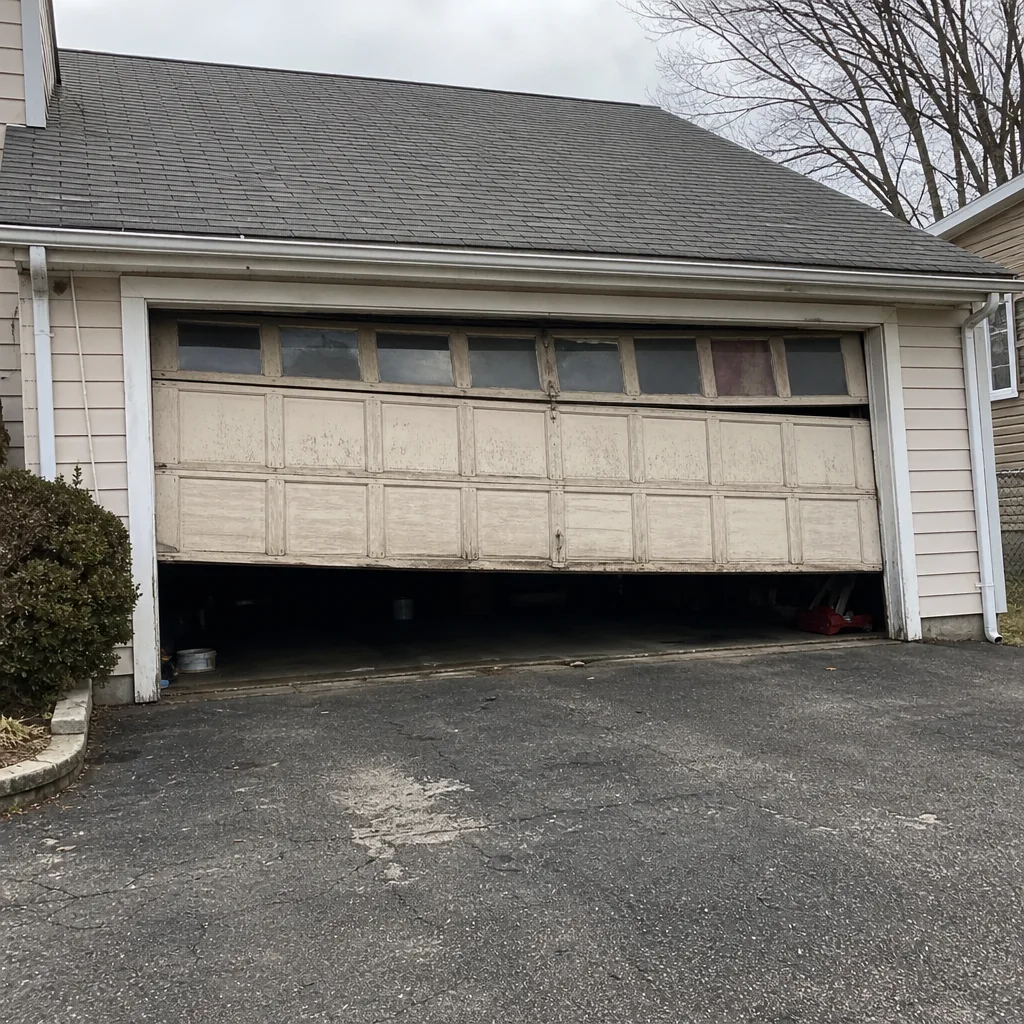 Before
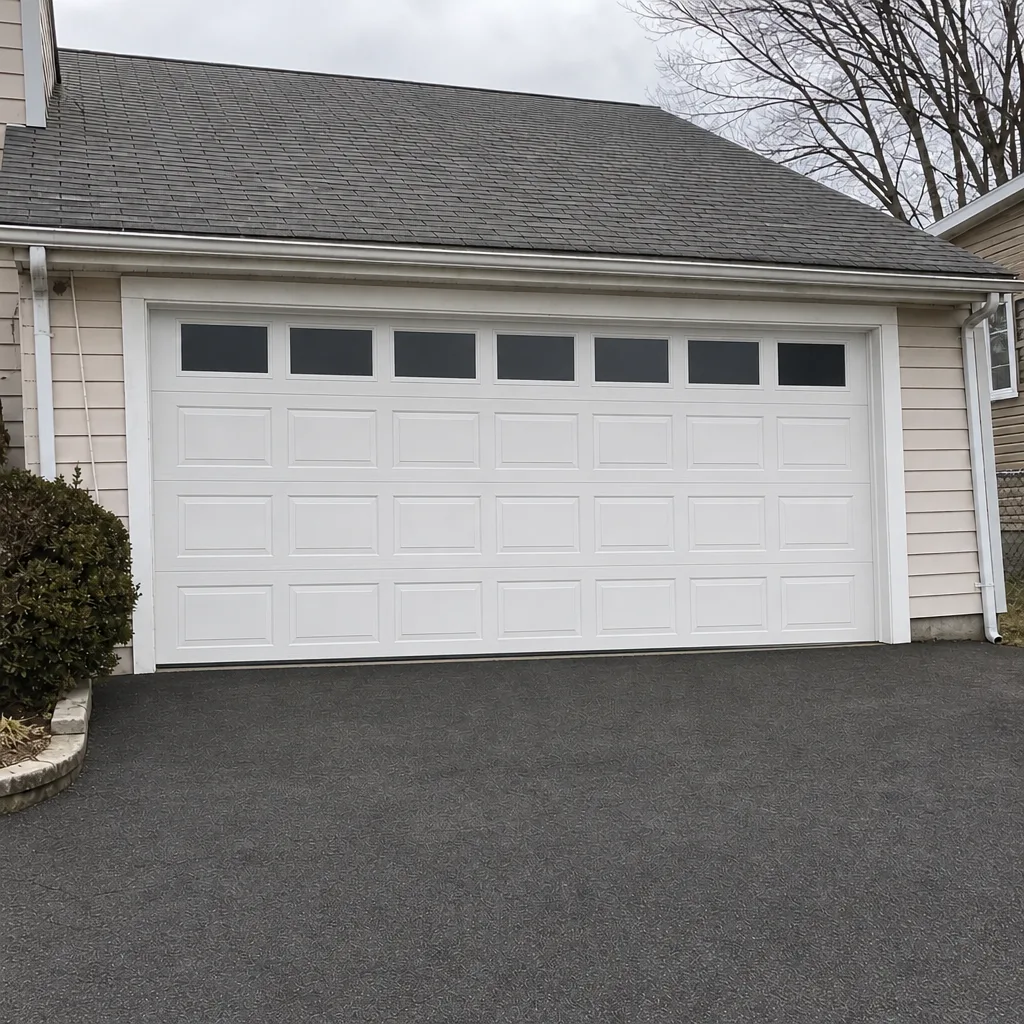 After
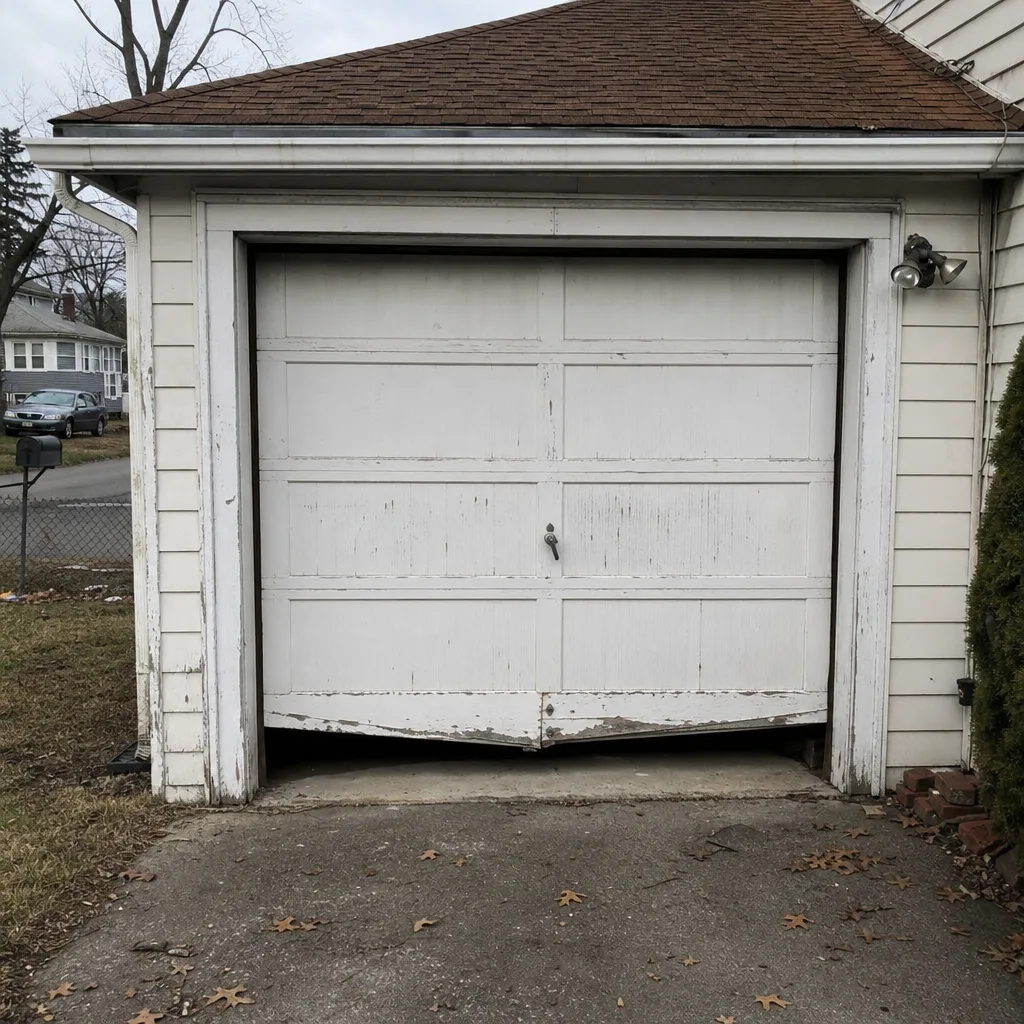 Before
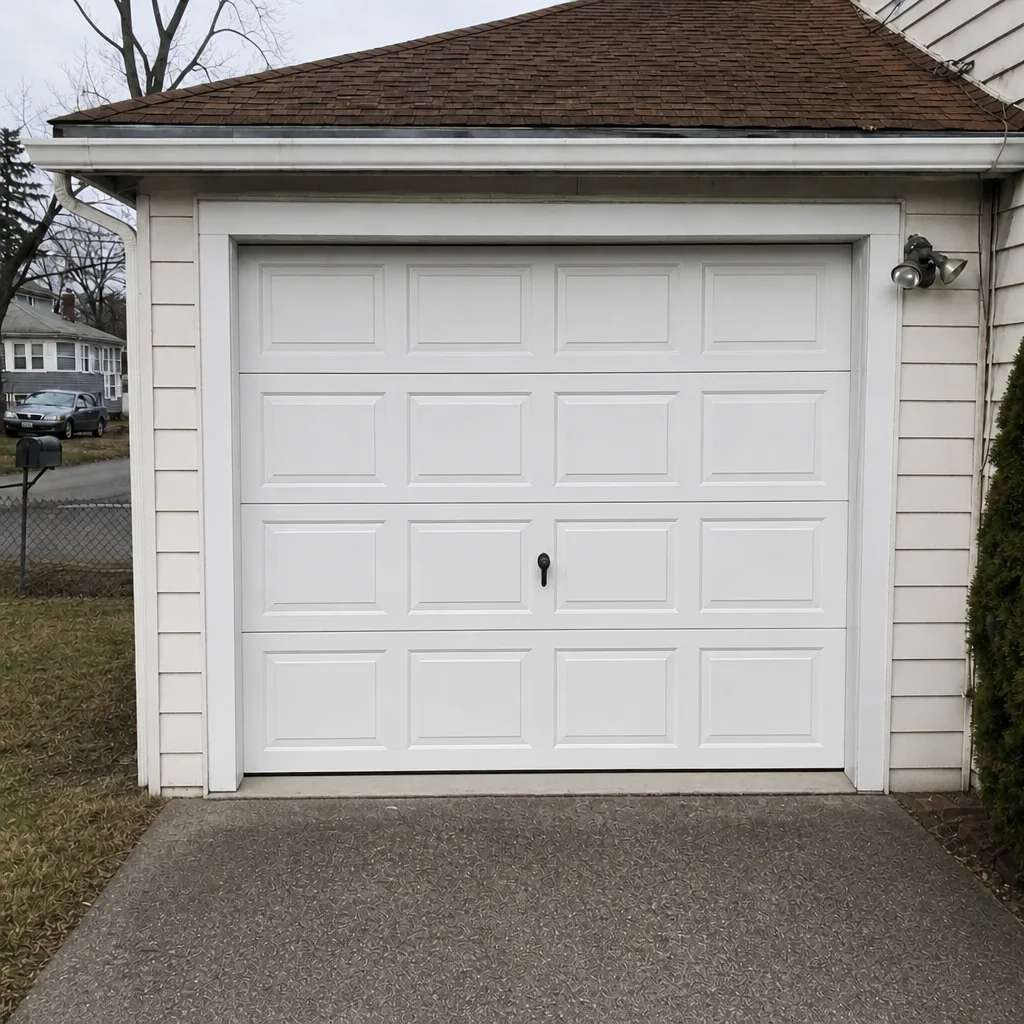 After
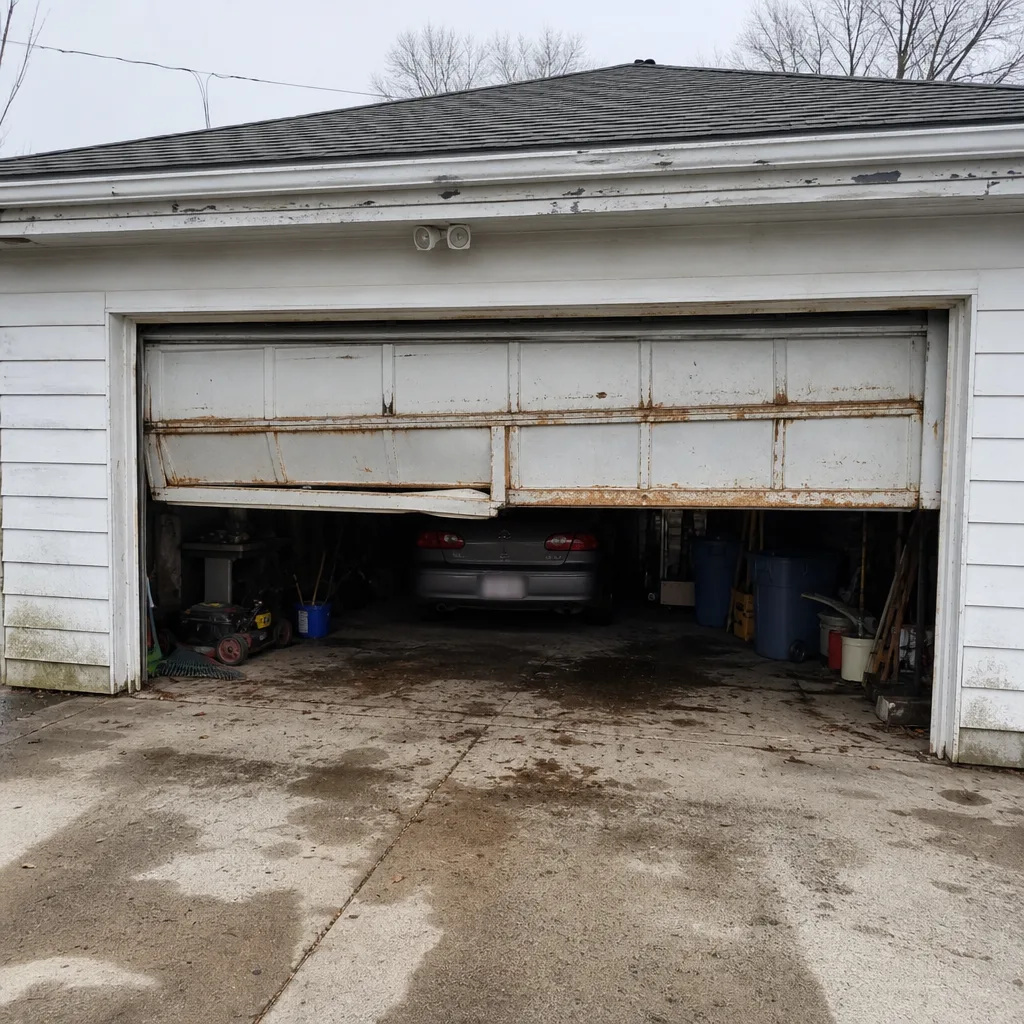 Before
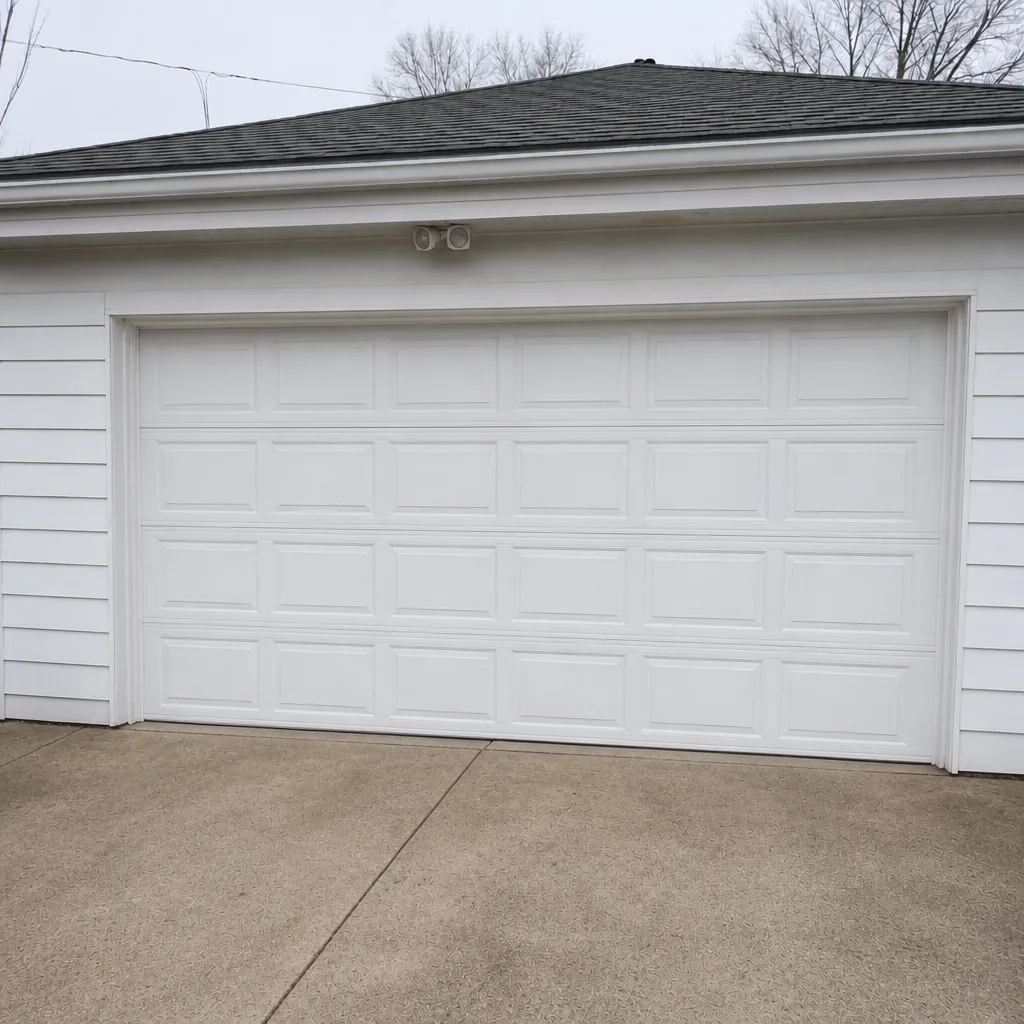 After
When to Call a Professional
Call a professional the moment you confirm a broken spring, a snapped or frayed cable, or a door that’s too heavy to lift. Those are load-bearing failures, and they’re where DIY work becomes genuinely dangerous. Call us, too, when the door reverses no matter how much you adjust the sensors, when the opener hums but the door doesn’t move, when the door travels unevenly, or when grinding and squealing continues after you’ve lubricated. And call if you’ve simply never run a balance test – a quick diagnostic tells you exactly where your door stands. Laurel Garage Door Repair offers free estimates in Brockton – call (844) 329-8773. We answer 24/7, and fast dispatch runs from 7am to 7pm, Sunday through Friday.
Frequently Asked Questions
A door that reverses before closing is usually reacting to its safety sensors, not failing mechanically. A misaligned sensor, a dirty lens, low sun glare, or an obstruction on the track triggers a programmed reverse to protect whatever’s in the doorway. Check the sensor lights first, then reset the down-limit. If it keeps reversing after that, call (844) 329-8773 for a free estimate – it’s often a quick opener adjustment.
Repair costs in Brockton depend on which system failed, so a sensor or limit adjustment, a track realignment, and a torsion spring replacement sit in very different ranges. That’s why we diagnose before we quote: the fix for a reversing door is far less than the fix for a broken spring. The written estimate sets the final price before any work starts, and the estimate itself is free. Call (844) 329-8773 for a quote.
Yes, same-day service is often available for repairs. We answer 24/7 and run fast dispatch from 7am to 7pm, Sunday through Friday. A call outside dispatch hours is booked into the next opening, Sunday through Friday, 7am to 7pm. Call (844) 329-8773 and we’ll find you a slot.
No – the price is quoted and agreed before any work starts. We diagnose the problem, give you a written estimate, and only then does the work begin. If we open something up and find a second issue, we tell you before touching it so you decide. The written estimate sets the final price. Call (844) 329-8773 for yours.
No. A torsion spring holds the full weight of the door under tension, and releasing that tension without the right tools and training can cause serious injury. You can safely check for a broken spring by looking for coils that sit tight with no gap, or a door that’s too heavy to lift by hand. Repair is a professional job – call (844) 329-8773 and we’ll handle it.
Most likely, yes. We service equipment from eight major manufacturers – LiftMaster, Chamberlain, Genie, Clopay, Amarr, Wayne Dalton, Craftsman, and Raynor – covering the majority of residential doors already installed in the field. We work on your brand, opener and door together, so you’re not handed off between contractors. Call (844) 329-8773 with your brand and we’ll confirm.
The Bottom Line
Troubleshooting a garage door in Brockton comes down to reading the symptom as a signal from one link in a system, not a single isolated fault. A door that won’t open points to springs or cables. A door that starts and reverses points to sensors, limits, or a track obstruction. Lubrication is always the first step, a balance test twice a year is the best early-warning system you have, and torsion springs and cables are always a professional job. Our technicians have up to 12 years of experience reading exactly this chain, and our team works on doors, openers, and installations under one specialty. Garage doors are all we do, and getting yours back to running right starts with one call.
Laurel Garage Door Repair is your Laurel Garage Door Repair specialist for repair, opener work, and installation across Brockton. For a free estimate, call (844) 329-8773. We answer 24/7, with fast dispatch from 7am to 7pm, Sunday through Friday.
Written by the team at Laurel Garage Door Repair.